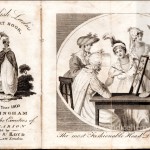
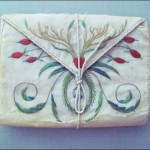
This card case, British c1795-1810, was used for calling cards or visiting cards. It measures 4″ by 2 ½”.
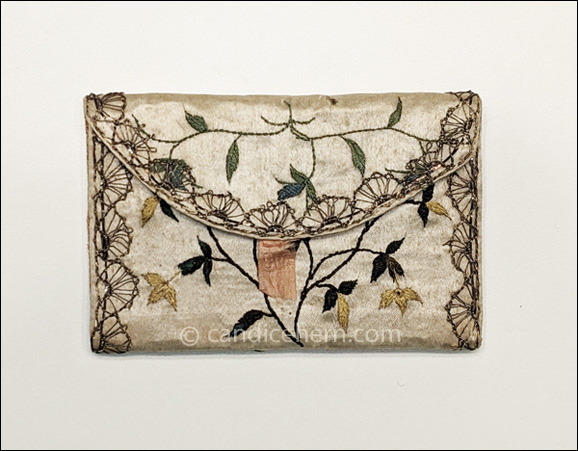
It is made of ivory silk embroidered with green leaves and yellow flowers on the front. The side edges and the flap cover are trimmed with silver wire shaped into a repeated fan-like pattern. The ivory silk covers a cardboard base to give it structure. It is possible that the cardboard structure could be purchased, then covered and decorated as desired by the owner. I suspect that besides making a case for oneself, these little cases would have made nice little home-made presents for family and friends.
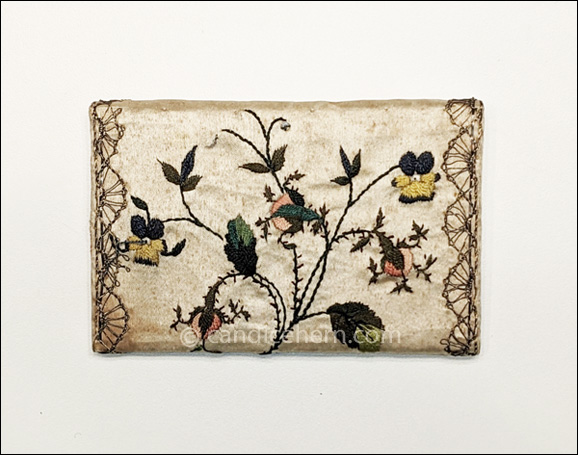
The back of the case shows more elaborate embroidery, including what look like pansies and rose hips.
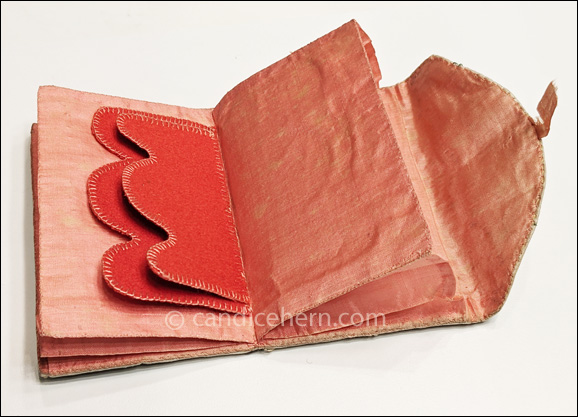
When the case is opened you can see two pleated pockets made of pink silk where visiting cards would have been kept. The red felt scalloped pieces would have been for needles and pins, for those unexpected wardrobe emergencies. The same type of felt flaps are seen in hussifs, portable folded sewing cases, the felt always pierced with needles and pins. So this small case served dual purposes.
Visiting cards or calling cards at this time were basically the same size as today’s business cards. The case would have held enough cards for a day of making calls, dropping them off when the visited person was not available. Here’s an example of a visiting card I found in an 1803 pocket diary:
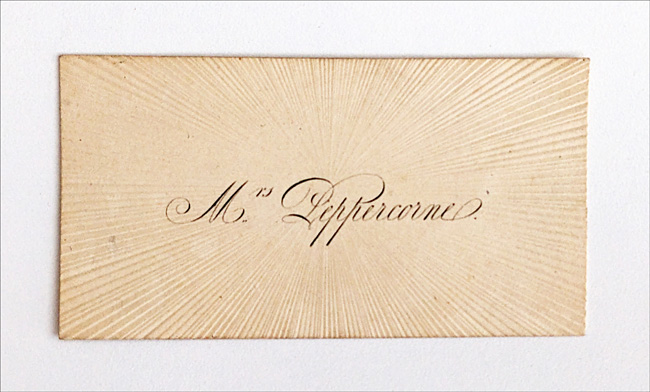
During the 18th century, visiting cards or calling cards would have been tucked inside a pocket case. But when pockets fell out of use during the Regency period due to the narrow silhouette of the high-waisted dresses, pocket cases were too large to slip into a small reticule. I believe that this was when the smaller card case was invented.